
Nine months later – what has actually changed?

I started this journey hoping to find answers to a few big questions. What do I want to do with my life? Where do I want to go? What will my next job be? Where do I want to live? I had hoped that during my travels I would experience the typical story: finding that one place where everything suddenly falls into place and building a new life somewhere far away. I was also told so many times, “Alissa, you’re going to get stuck somewhere and never come back.”
My journey is now almost over, and I’ve arrived at my (for now) final destination. And these days, I find myself asking completely different questions: How do I want to feel? What do I need for my life to feel like my own? What kind of people do I want around me? How do I want to work? What gives me energy, and what takes it away?
Maybe I don’t need to find the one perfect career after all. Maybe what I really need is a certain way of living and working. A way of life that suits me, gives me the freedom to grow, and allows me to combine different things that matter to me. Not a job title that makes other people look at me with admiration and makes me feel successful.
So I didn’t end up getting stuck in one country, as I may have secretly hoped at the beginning. Instead, something else has opened up for me that I never expected. Something that brings together several things that are important to me. But more on that later. First, I want to take you a little deeper into the country I’m currently in.
My fingernails are finally clean again. In South Africa, they were pretty much permanently dirty from constantly cleaning horses and tack. Now I’m leaving the horse stables behind and starting the (for now) final chapter of my African journey: Malawi, a relatively small country in southeastern Africa.
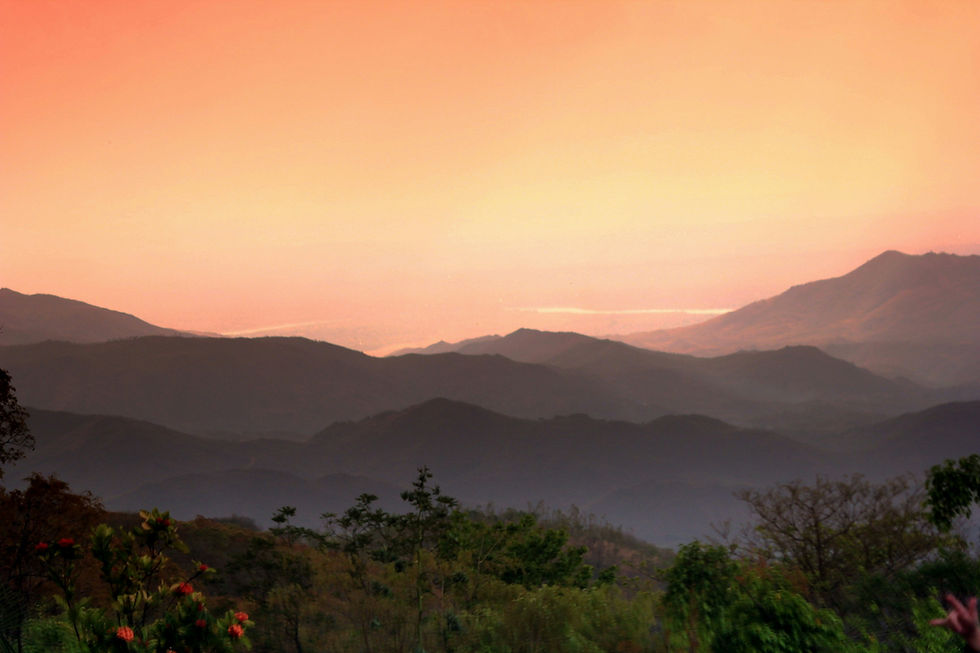
To be honest, Malawi wasn’t necessarily the first country that came to mind when I thought about Africa before my trip. That’s why I’ve been so surprised by how diverse it is. Mountains, forests, national parks, vast grasslands, and a huge lake are all found within a relatively small area. Malawi lies between Tanzania, Zambia, and Mozambique. With around 23 million inhabitants, the country is quite densely populated for its size. The capital is Lilongwe, while Blantyre is the country’s economic centre.
One of the country’s most iconic landmarks is Lake Malawi. The lake is around 590 kilometres long and covers roughly 20 percent of Malawi’s total area. It is so vast that in many places, it’s hard to believe you’re actually standing beside a freshwater lake. The water is incredibly clear in many areas, making Lake Malawi a perfect place for swimming, snorkelling, diving, kayaking, or simply relaxing on the beach. The underwater world is particularly fascinating. The lake is home to more than 350 endemic species of cichlid, meaning fish species that are found only here. Lake Malawi National Park is therefore also a UNESCO World Heritage Site. If you’re looking for more of an island experience, Likoma Island is a great option. The island lies in the middle of Lake Malawi and is also home to the impressive St. Peter’s Cathedral.
If you think Malawi is mainly about lakes and safaris, you’re pretty far off. The country is also an interesting destination for hiking and mountain landscapes. In the south lies the Mulanje Massif, home to Sapitwa Peak, which rises to around 3,002 metres. Steep cliffs, green valleys, and mountain forests make the area one of the country’s best-known hiking destinations. Multi-day treks are possible, as well as shorter hikes. I was able to explore the Zomba Plateau myself. Once you reach the top, the landscape changes completely. Forests, hiking trails, viewpoints, and waterfalls such as Emperor Falls and Williams Falls make the plateau one of my highlights so far. Further north lies Nyika National Park, a high plateau at more than 2,000 metres above sea level. Instead of the classic African savanna landscape, you’ll find vast grasslands, wildflowers, zebras, and various species of antelope.
Malawi also has plenty to offer when it comes to safaris. Some of the country’s best-known protected areas include Liwonde National Park, Majete Wildlife Reserve, and Nyika National Park. I’ve had the chance to experience Liwonde myself, and it’s exactly here that wildlife has taken on a whole new meaning for me.
During my stay, I’m volunteering with the Lilongwe Wildlife Trust (LWT). LWT has been active since 2008 and works in areas such as wildlife rescue, rehabilitation, research, environmental education, and the fight against wildlife crime. Lilongwe is also home to the Lilongwe Wildlife Centre, where rescued animals are cared for and rehabilitated.
At LWT, I’m currently part of the Research Team in Liwonde National Park. This means doing two game drives a day: one early in the morning and one in the late afternoon, sometimes continuing into the night. And yes, sometimes you get some pretty incredible wildlife sightings. For example, you might be chased off the road by an elephant even though you’re sitting safely in the car, and then have to find somewhere to hide and hope it moves on. But sometimes these giants still come surprisingly close to the vehicle. Or you might find yourself watching three lions and a crocodile sharing a kudu carcass and repeatedly fighting over a piece of meat.
For me, it’s exciting to experience Malawi this way rather than just as a tourist. Instead of simply observing animals on a safari, I also get an insight into the work behind wildlife conservation. Early mornings, getting involved, observing animals, and at the same time understanding how much work is actually required to protect wildlife in the long term.
Of course, I’ve only seen a small part of Malawi so far. Even so, I can already tell that the country isn’t necessarily about travelling from one famous attraction to the next. A lot of what makes Malawi special happens along the way. It’s no coincidence that Malawi is also known as the “Warm Heart of Africa”. The name mainly refers to the open and friendly nature of its people, and you notice that warmth and hospitality in everyday life again and again. People wave at you as you pass, small markets line the roadsides, and bicycles seem to carry just about anything you could possibly imagine. Add to that the red earth, the green landscapes, and, of course, the animals you keep coming across. Maybe that’s exactly what makes Malawi so special. It’s not a country where you necessarily already know every highlight before you arrive.
For me, Malawi is therefore not only the final stop on my African journey, but also somehow the place where a lot of things have come together. And it’s here in Malawi that I’ve realised that this journey may not have given me the answer I was looking for at the beginning. Instead, it has shown me quite clearly what suits me – and what doesn’t.
Before my trip, I had been considering starting another degree in conservation, wildlife protection, or ecological engineering. That’s one of the reasons why I’m currently volunteering with LWT and working with the Research Team in Liwonde National Park.
I find wildlife incredibly fascinating. And I genuinely thought I would love what I’m doing here: going out on safari every day, finding animals, documenting what we see, and analysing footage from camera traps.
But now I’m realising that I’m not the person who enjoys sitting in a car for hours searching for animals or tracking them. I need movement. I want to really experience my surroundings and feel like I’m part of them. Sitting in a car sometimes makes me feel like I’m simply observing everything from a distance.
I thought I was someone who enjoyed immersing myself deeply in a subject, observing things for a long time, and getting completely absorbed in them. But apparently, that isn’t entirely who I am either. I still find research and conservation fascinating, and I think they are incredibly important fields. But I’m realising that I’m not someone who wants to do this every day.
I wanted to find out whether conservation could be my next path. Now I’m sitting here and realising that the idea fascinates me more than the actual day-to-day work. And maybe that’s exactly what this journey was meant to do: help me rule things out, too.
I don’t have to turn conservation into my career just because I love wildlife. I don’t have to study something just because a particular degree sounds interesting. And I don’t have to turn every experience into a new life plan straight away.
Sometimes the realisation is simply: This is fascinating – but it’s not my everyday life.
And of course, doubts come with that. Did I use this year “the right way”? Should I have tried different things? What would have been “better”? Where could I have experienced more?
Looking back, my mind is trying to turn all these experiences into a perfect plan. But I started this year precisely because I didn’t have a plan. I wanted to try new things and find out what suits me and what doesn’t. And that’s exactly what I did.
Maybe I didn’t get the answers I expected at the beginning. But I got something else: the opportunity to experience myself in completely different situations and, through that, understand myself better.
I don’t just need an interesting subject. I need a certain way of living.
Of course, that thought still creeps into my head from time to time: I’m over 30, I don’t have a traditional career path, a permanent job, a family, a partner, a house, or a clear plan. So surely by now I should know what I want and how I’m going to support myself.
But I also have to remember what I’ve done this year. I left behind a stable and secure life because it no longer felt right for me. That is not a waste of time. And I’m certainly not starting from zero.
I have professional experience, experience in development work, travel experience, experience in tourism, and life experience. On top of that, I have my yoga training, my riding experience, language skills, and now also experience in conservation, safaris, and research.
I’m not building a CV right now. I’m creating a mosaic. I’m trying out what feels right for me. Which people bring out the best in me. Which kind of work gives me energy. And which things I want to combine.
Maybe one day I’ll be able to look back and see how all the pieces fit together.
And then something happened that I never would have expected at the beginning of this journey. I met Cat from Reiten & Yoga. I first met her in Namibia during my volunteer programme there. Cat was running yoga and horse riding retreats, and I guided her groups on horseback.
Cat brings together exactly the things that have been a part of my life for a long time: riding, yoga, and travel. She organises retreats in different places around the world, combining time with horses, yoga, nature, and discovering new countries. I absolutely love this combination because it brings together so many things that are important to me: horses, movement, yoga, nature, travel, and meeting new people and discovering new places. And the more I think about it, the more I realise: this feels incredibly true to who I am.
And something has come from this that I never expected at the beginning of my journey. From next year, I’ll be joining Cat as a retreat guide for retreats in Morocco, Ibiza, and Iceland. (There are also retreats held in English. The ones I’ve linked are all conducted in English.)
I’m genuinely incredibly grateful to Cat for this opportunity. For giving me this chance, for trusting me and believing in me, and also for giving me the opportunity to continue developing my yoga practice. It means a lot to me right now. I don’t feel like I have to choose between my different passions. Maybe this is exactly the kind of way of working and living that I’ve been looking for throughout this journey.
And I can feel that excitement again when I think about what’s ahead. The retreats, the new countries, the horses, yoga, and all the people I’m going to meet. I haven’t felt that feeling in a long time.
Nine months later – what has actually changed?
I used to think I had to know what I wanted to do professionally in order to know who I was. Today, I feel like it’s actually the other way around: I have a better understanding of who I am, what matters to me, and what excites me – and I can let my path develop from there. Maybe that’s the most valuable thing I’ve learned after nine months: I didn’t find the one perfect plan, but I’ve become much more excited about creating my own. So, I didn’t actually end up getting stuck in one country. But maybe I got stuck on something else instead: the idea that I don’t have to fit my life into a single box.
P.S.: If you have any questions about the retreats, Reiten & Yoga, or my new role, feel free to get in touch with me anytime. You can find out more about Cat’s retreats here: https://www.reitenundyoga.ch or on Instagram at Horse & Yoga Retreats. Maybe we’ll even see each other at one of the upcoming retreats someday.


Comments